
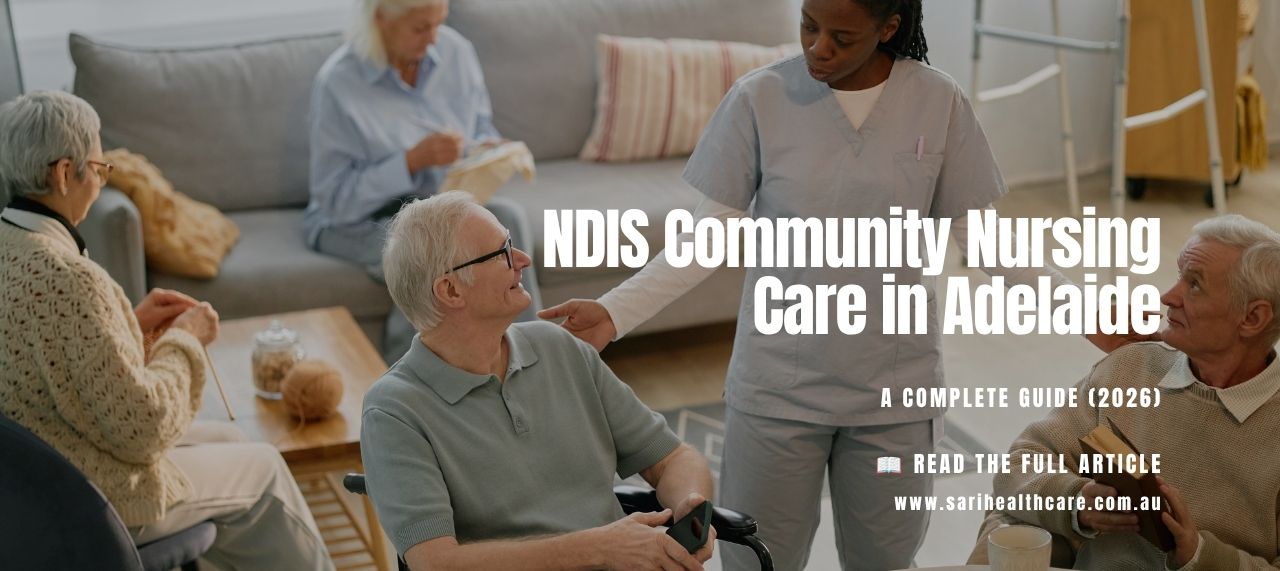
NDIS Community Nursing Care in Adelaide: When Everyday Support Becomes Clinical
When a person has disability-related health needs, the right support can make everyday life feel safer, more predictable and more manageable at home. Community nursing can be part of that support when care involves clinical assessment, nursing judgement or health tasks connected to the person’s disability.
NDIS community nursing care in Adelaide may support participants to receive appropriate clinical care in familiar surroundings, while keeping their routines, choices and goals at the centre. Depending on the individual, this can include nursing assessment, care planning, specific clinical tasks, or training and supervision for support workers.
The key word is disability-related. The NDIS does not replace a GP, hospital or the wider health system. Community nursing under an NDIS plan is considered when the support is connected to a person’s disability, is appropriate for the NDIS to fund and has been included in the participant’s plan.
The Quick Answer
NDIS community nursing care may include clinical assessment, nursing tasks, care planning, worker training or supervision for disability-related health needs. The right arrangement depends on evidence, a safe plan and available funding.
What Does NDIS Community Nursing Care Mean?
Community nursing is clinical support delivered outside hospital, often in a person’s home. Under the NDIS, it may form part of disability-related health supports that help a participant manage a health need caused by, or closely connected to, their disability.
Depending on the circumstances, funding may cover a qualified nurse, training for day-to-day supporters, or certain equipment and consumables. The support must meet current NDIS rules, relate to the participant’s disability and be included in the plan.
Treatment for illness, acute hospital care, diagnosis, medicines and non-disability-related health conditions generally remain the responsibility of the health system. A provider should explain this boundary without promising NDIS funding.
When Does Everyday Support Become Clinical?
The same task can carry different risks for different participants. The right arrangement depends on the person’s condition, clinical instructions, environment, equipment, communication and ability to report a change.
A registered nurse may assess a disability-related health need, develop or review a care plan, perform a clinical task, train workers, supervise delegated care or help establish an escalation process. In other situations, a trained support worker may safely carry out a task after receiving participant-specific instruction from an appropriately qualified health professional.
The NDIS Commission does not say every high-intensity support must be delivered by a nurse. Providers must ensure workers have the skills and knowledge relevant to the participant and task. Training should be person-specific, not treated as blanket permission.
A Safer Question to Ask
Instead of asking whether any support worker can do a task, ask who is clinically appropriate for this participant and what training, supervision and review are required.
What Kinds of Complex Health Support May Be Involved?
Sari Healthcare’s complex health support information lists a range of clinical and high-intensity support areas. Depending on an individual assessment, current registration, staff competency and the participant’s funded plan, examples may include:
- Medication administration and monitoring within an authorised care plan
- Complex bowel care and management
- Urinary catheter care
- Stoma care and support
- Wound assessment and management
- Enteral feeding through PEG or NG systems
This list is not a checklist of services every participant will receive. Each area requires its own assessment, clinical instructions, risk controls and review process. Some tasks may need a nurse; others may be delegated to a competent worker after appropriate training. Availability should be confirmed directly with the provider.
Why Care Planning Matters as Much as the Task Itself
Complex care is rarely one procedure at one time. It sits inside a person’s day, so a safe plan must consider privacy, communication, mobility, eating and drinking, personal care, equipment, family involvement and what happens when something changes.
A useful participant-specific plan should make the following clear:
- The participant’s preferences, consent and communication method
- The task to be performed and who is authorised and competent to perform it
- The equipment, supplies and infection-control steps required
- Signs that the participant’s usual condition may be changing
- Who workers should contact and when care must be escalated
- How incidents, near misses and changes are documented
- When the plan and worker competency will be reviewed
Good documentation should support the participant rather than take control away from them. The person receiving support should be involved in decisions as far as possible, and information should be shared only with consent and through appropriate, secure channels.
What Evidence May Be Needed for NDIS Funding?
The NDIA needs evidence before deciding whether a disability-related health support should be included in a plan. What is required depends on the support, but evidence will usually come from a treating health professional or allied health practitioner.
The evidence may need to explain:
- The type and amount of support required
- How the need relates to the participant’s disability
- Why the proposed support is effective and beneficial
- Who is appropriately qualified to provide or oversee the support
- Where and how the support will be delivered
- Whether training, equipment or a quote is also required
A provider can discuss services and availability, but cannot approve funding. Participants can speak with their my NDIS contact, plan manager or support coordinator. Clinical evidence should come from the relevant treating professional.
7 Questions to Ask an NDIS Community Nursing Provider
- Registration: Are you registered for the support I need, and is the service within your current registration scope?
- Clinical Oversight: Who will assess the need, write or review the care plan and decide whether a task can be delegated?
- Training and Competency: How will workers be trained for my specific equipment, routine and risks, and how will competency be checked and documented?
- Continuity: What happens if my usual nurse or worker is unavailable?
- Escalation: What is the process if my condition changes or a worker has a clinical concern?
- Communication and Privacy: How will you communicate with me, my nominee and treating team with my consent, and how will my health information be stored and shared?
- Service Agreement and Review: What is included, what may cost extra, how are cancellations handled, and how often will the care plan and support arrangement be reviewed?
Price should be transparent, but clinical governance, communication, participant choice, continuity and a credible response to problems matter just as much.
What Good In-Home Complex Care Should Feel Like
Clinical support can be highly technical, but the experience should still feel personal. The participant is not a collection of tasks. They are a person with routines, relationships, preferences, cultural needs and goals beyond their health support.
Well-organised care should create predictability, not disruption. Workers should know the current plan, participants should know who is coming, and changes should be explained. Agreed information should be shared without overlooking privacy.
Care should help the person take part in daily life as safely and independently as possible. The clinical task matters, but so does what it enables: work, programs, family time or greater security at home.
Discussing Community Nursing Care with Sari Healthcare
Sari Health Care Pty Ltd is listed by the NDIS Quality and Safeguards Commission as an approved registered provider, with registration groups that include Community Nursing Care and assistance with high-intensity personal activities. Sari Healthcare also advertises complex health support and in-home support in Adelaide.
If you are exploring community nursing support, Sari Healthcare can talk through the support being requested, the participant’s existing clinical information and care plan, and whether the service appears to fit Sari’s current scope and staff availability. This gives participants, families and referrers a clearer starting point before any service arrangement is made. An enquiry does not guarantee a service or funding outcome.
Talk to Our Team About Community Nursing Support
- Read about Sari Healthcare’s complete health support
- Review the NDIS and pricing information
- Submit a referral
- Contact Sari Healthcare
Phone: 0458 339 628
Email: admin@sarihealthcare.com.au
Frequently Asked Questions
Can the NDIS fund community nursing care?
The NDIS may fund disability-related health support when it relates to a participant’s disability, meets current funding criteria and is included in the participant’s plan. Funding is not automatic, and the NDIS does not replace services that should be delivered by the mainstream health system.
Is community nursing the same as support work?
No. Community nursing involves clinical assessment, nursing judgement or clinical tasks that require an appropriately qualified nurse. A support worker focuses on daily living and participation. Some disability-related health tasks may be delegated to a trained and competent support worker under an individual care plan.
Does every high-intensity support require a registered nurse?
Not necessarily. The appropriate worker depends on the participant, the task and the clinical plan. Some tasks may be performed by a competent support worker after participant-specific training from an appropriately qualified health professional. Assessment, delegation, supervision and review remain important.
What information should I have before making an enquiry?
It helps to know the requested support, current NDIS funding, plan management and whether a treating professional has prepared a care plan. Ask how to share health documents securely.
Can Sari Healthcare provide community nursing at home in Adelaide?
Sari Healthcare advertises in-home and complex health support in Adelaide and is registered for Community Nursing Care. Actual availability and suitability depend on the participant’s needs, location, plan, clinical requirements and appropriately qualified staff.
What if the health need is not related to the participant’s disability?
Treatment for illnesses, acute care, diagnosis, medicines and health conditions that are not disability-related are generally handled through the mainstream health system. Start with the participant’s treating doctor or health service and ask the NDIS contact about the boundary between health and disability supports.
Clinical Support Should Fit the Person – Not the Other Way Around
NDIS community nursing care can connect clinical knowledge with everyday life. Done well, it builds a safe, understood and respectful arrangement around one person.
For complex nursing care in Adelaide, begin with the evidence, current plan and a frank conversation about risk, training, communication and choice. Ask who will do what and how the arrangement will be reviewed.
Sari Healthcare can discuss its current service availability and the next steps for an assessment or referral. Contact the team to talk through the support being requested.
General Information Only
This article is general information, not medical advice or a funding guarantee. Seek clinical advice from a treating professional and confirm plan arrangements with the NDIA or relevant NDIS contact.